 AU
AU USA
USA UK
UK ES
ES FR
FR BR
BR TH
TH IN
INHow To Manage Your Mental Health This Pandemic

Work looks so different from what it was twenty (or even ten) years ago.
The COVID-19 pandemic accelerated the change. As the pandemic spread, our “new normal” came into effect. One of the major adjustments was working from home.
Some organizations kept the changes. Specifically, they kept ‘working from home’ as part of their major policy. And yes, while remote work has given employees more control over their time, there are also downsides.
Working alone all the time without your colleagues and bosses can impact your emotional, psychological, and social well-being.
Anxiety. Depression. Burnout. All of these things can be caused by isolation.
Still, there are ways to manage your mental health when working remotely. Here’s how.
How Did Covid-19 Affect Remote Work?
Whether you remember it or not, remote work was rare before the pandemic.
Normally, employees would commute to work every day. They’d even enjoy the odd social interaction in the workplace!
In March and April of 2020, this all changed.
Many organizations embraced remote work. Not that they had much choice–everybody had to stay home to support the healthcare system.
From social distancing to lockdowns, everybody had to do their bit.
And so, remote work was on the rise. It changed the working landscape in a few different ways.
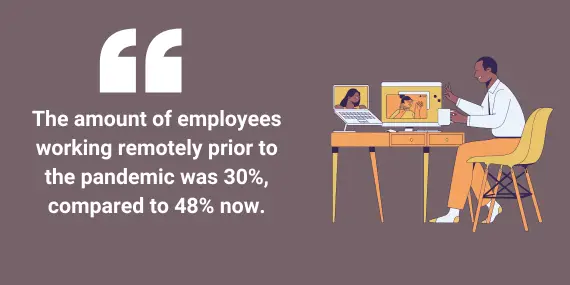
Source: intuition.com
Work From Home 🏠
To keep operations running as smoothly as possible, organizations had to act quickly.
They had to prevent the mixing of employees while keeping the business going.
Everyone from startups to multinationals embraced the WFH life.
New Technology Introduced 🖥️
Video conferencing tools. Messaging software. Cloud-based collaborations.
To support the working-from-home process as much as possible, organizations introduced new technology.
Workers had to adjust to these new technologies and use them to remain as productive as possible.
Juggling Work and Life 🤹
The shift from working in an office to working at home can destabilize a very delicate balance.
There’s already a fine line between work and home, but when your living room becomes your office, that line is suddenly very blurry!
Many workers struggled with the transition, feeling increased pressure to stay online. This had a knock-on effect on mental health.
Impact on Mental Health 🧠
The first year of the pandemic saw a global 25% increase in anxiety and depression.
For many reasons, people felt uncertain about the future. Isolation caused loneliness to creep in. Health anxiety and fear of the new normal (coupled with the stresses of being cooped up with family members) were a dangerous mix.
How to Manage Your Mental Health When Working Remotely
The world may have moved on from the pandemic, but some organizations still allow their employees to work remotely.
This works great for some people.
For example, with more flexibility, some employees find it easier to manage their work-life balance.
There’s also the freedom you get from being at home and the lack of a commute. Not to mention the convenience. What did people do before they could get a laundry load done on their breaks?!
On the flip side, working remotely can trigger those aforementioned mental health issues.
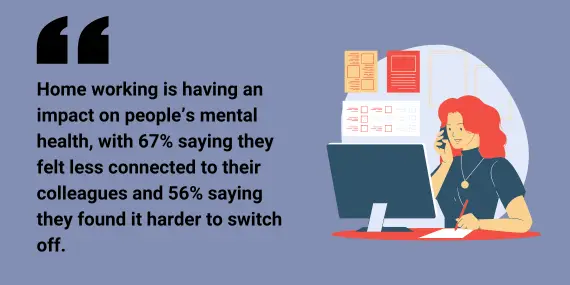
Source: Royal Society for Public Health (RSPH)
To manage these negatives and put your well-being first, there are some steps you can take.
Stick to a Routine ✅
Daily routine disruptions go hand-in-hand with symptoms of mental health conditions.
So, while the pandemic might be behind us, sticking to a consistent schedule is still important.
Without a reliable schedule, the line between work and personal time becomes blurred.
Treat your remote working schedule like a regular 9-5 in the office.
Follow your usual sleep and work patterns, getting up at the same time you normally would.
Get dressed and have breakfast, using what would be your ‘commute time’ to exercise, read, or listen to music.
Then, when your workday ends, it’s time to switch off from work in every possible sense.
Shut down your laptop, leave your workspace, and stop checking work-related emails/messages.
Now is the time to enjoy your personal interests and detox from work.
Take Regular Breaks 🌷
Taking care of your mental health includes taking regular breaks, no matter how pressing your deadlines/tasks are.
Allocate time during your work schedule for a lunch break and regular screen breaks.
Why not try the Pomodoro Technique?
Even just taking five minutes away from your work can really boost your productivity.
Better yet, exercise your green thumb in the garden during your breaks.
In fact, several studies have shown that spending time in green spaces is great for your mental health.
Stay Connected 🗣️
Feeling isolated can be difficult. It’s enough to negate the positives of working from home.
That’s why it’s so important to connect with your loved ones and co-workers.
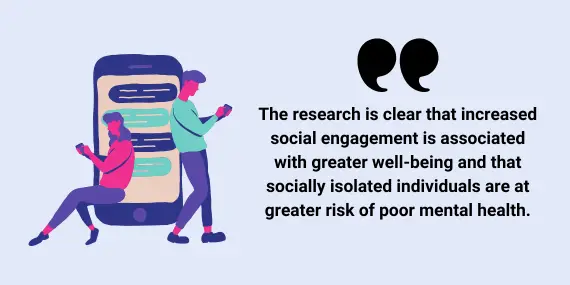
Source: Sage Journals
So, ditch the emails and make time for video and phone calls. Call a friend on your break, or arrange a meet-up outside of work.
Don’t forget that your co-workers are in the same boat here. So, reach out!
Ask how they are doing and see if you can find ways to support each other.
Celebrate Positivity 😄
When you’re not interacting with your coworkers, you might not feel like you’re contributing to your team’s performance.
Get over this by celebrating your own accomplishments. Embrace positive thinking and celebrate every day, regardless of how small your achievements are.
Maybe you went above your targets on a particular day.
Maybe you used your break time to read a chapter of a book that has been collecting dust on your shelf.
Everything is worth celebrating. It’s the small wins!
Managing Your Mental Health: Final Thoughts
Your mental health matters whether you work remotely or on-site.
Make sure you adopt healthy lifestyle patterns to protect yourself.
Most importantly, always strive to stay connected with those around you.
Together, we can strengthen and protect our mental health.
For more advice relating to employee wellness, check out our blog!