 AU
AU USA
USA UK
UK ES
ES FR
FR BR
BR TH
TH IN
INWhat Does the Mad Sad Glad Retrospective Entail?

If you’re part of a Scrum team, it’s your lucky day – today, we’re talking about the mad, sad, glad retrospective.
This framework helps agile teams collect insight into each team member’s emotions during the sprint retrospective phase.
It’s more than an opportunity to chinwag. It’s a type of feedback that can change the way you approach future sprint planning.
In today’s article, we’ll explore this agile retrospective framework in more depth. By the time you’ve finished reading, you’ll know how to get the most out of your team’s constructive criticisms.
What Is An Agile Sprint? 🏃
If you aren’t familiar with agile sprints, you’ll scratch your head when you see us talk about Scrum masters and software development.
So, let’s get you up to speed.
In agile software development, a sprint is when a Scrum team breaks down a project into short, iterative phases.

Source: Broadcom
Note: That being said, the sprint process and mad sad glad retrospective aren’t limited to software development teams. You can even run shift-based sprints and retrospectives!
These sprints are time-boxed, too.
During a sprint, a team will work to complete specific tasks, reach certain milestones, or produce a set amount of deliverables.
Sounds like a productive way of producing high-quality work, right? For that reason, you probably want to know about the Scrum sprint process…
The Sprint Process 🧠
Source: International Institute for Learning
Scrum sprints start with the Product Owner, who creates and prioritizes a list of items called the product backlog.
After a sprint planning meeting, the Scrum team knows how many items they can take from this backlog to develop into sprints.
Throughout the sprint, everyone gets together for a daily scrum meeting. This meeting is a chance for team feedback – after all, you need to know what obstacles they’re facing, right?
With the team’s constructive feedback, the Scrum master will then try to remove those obstacles.
At the end of the sprint, the team will showcase their deliverables to stakeholders for feedback during a sprint review.
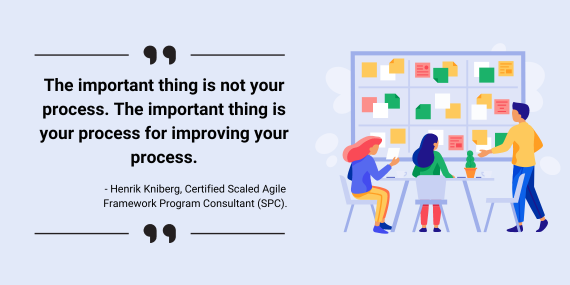
Last of all, there will be a sprint retrospective meeting. In this meeting, everyone will look back on the previous sprint and determine what worked and what didn’t.
So, you can treat sprint retrospectives like performance reviews, where continuous improvement is the ultimate goal.
So, About The Mad 😡Sad 😢Glad 😄Retrospective...
Now that you know the basics, we can get down to brass tacks.
The mad sad glad retrospective is a way of collecting data during a sprint retrospective meeting.
It simply calls for every team member to consider which stages of the sprint made them mad, sad, or, of course, glad.
While Scrum teams regularly review sprints – even while working on one – the mad sad glad retrospective allows every team member to vent.
That’s why it’s so important to implement this framework. The last thing you want is for your team to feel too frustrated or distressed to continue improving the team’s performance.
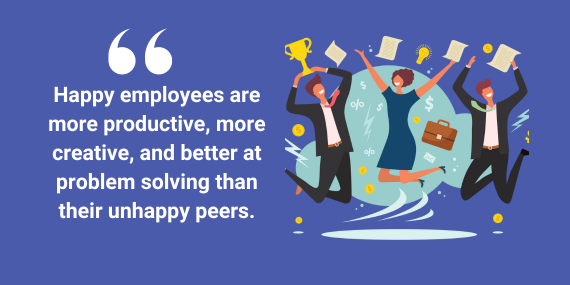
Plus, your team will have a safe environment where they feel comfortable to share their perspectives. As an added bonus, your team will feel much happier for having that safe space.
Source: Harvard Business Review
Did you know about the study that shows that 40% of 1860 employees said they don’t feel confident sharing their ideas? Well, the mad sad glad retrospective is one way you can lower that percentage.
It’s a great way for the team to get things off their chests before the next sprint, which will help them identify action items.
Tip: Action items are measurable tasks that the team agrees to complete to improve the sprint process and its outcomes.
To give you a better idea of this framework in action, we’ve provided a few examples:
- ‘I’m mad that I have to attend a lot of many meetings.’
- ‘I’m sad that I’m overwhelmed with my workload.’
- ‘I’m glad that I got positive feedback from my managers.’
How To Stage A Mad Sad Glad Retrospective
This part is a doddle.
If you’re staging a mad sad glad meeting in person, start by drawing three columns (Mad, Sad, and Glad) on a whiteboard.
Then, you can gather your crew in the conference room 🤝.
If you’re hosting an online meeting, we recommend using a retrospective template from TeamRetro or Miro.
From here, give your team some time to reflect on the previous sprint.
After they’ve had time to reflect, instruct your team to grab some sticky notes and write down what made them feel – you guessed it – mad, sad, or glad.
When your team has penned their thoughts and feelings, ask them to place their sticky notes under the appropriate column.
The next thing you should do is read the team’s notes 🗒️and see if there are any common themes.
These common themes make for great talking points in your upcoming discussions.
On the topic of that upcoming discussion, it’s important not to point fingers or dish out blame.
You simply just need to discuss how everyone can avoid the events that caused their anger or upset. You should also discuss the events that inspired joy and how you can incorporate those events in future sprints.
This is how you’ll find those action items we mentioned earlier.
Tips For Your Agile Retrospective Meetings
We want you to get the most out of your mad sad glad retrospectives, so we’ve provided you with some tips below!
- Allocate 30-60 minutes of the day for your team to reflect on how they feel 🕜.
- Make sure the conference room is in a quiet location.
- Encourage your team to write out a lot of notes if needed.
- Assure your team that there are no right or wrong answers.
- Keep the focus on the team’s emotions rather than actions.
- Ask your team to turn their phones off or on silent for the retrospective 📴.
- Give equal consideration to each of your team member’s thoughts and feelings.
- Offer guidance on how your team can express their emotions constructively 🗣️.
- Avoid making accusations.
- Finish your retrospective with an action plan in place that everyone agrees on.
The Mad Sad Glad Retrospective: Final Thoughts
Team feedback is an integral part of a team’s performance. When you show your team members and employees that you value their input, they will feel more appreciated.
When employees feel appreciated, they will always strive to produce the highest quality of work ↗️.
So, in the spirit of teamwork and collaboration, why not provide your team with other valuable resources?
Consider introducing modern messaging software so that your team can communicate more effectively.
For more advice on employee wellness and workplace culture, check out our blog!