
 AU
AU USA
USA UK
UK ES
ES FR
FR BR
BR TH
TH IN
INUseful Ways To Reduce Stress In The Workplace
In our everyday lives, stress plays a large part in our well-being. From personal relationships, financial issues or even daily tasks, stress can immerse our minds and affect our moods. Workplace-related stress is a common concern and affects everyone, no matter their profession.
According to Gallup’s State of the Global Workplace 2023 Report, Australia and New Zealand have the second-highest stress rate of 47%.
As a manager, considering your employee’s mental health is vital when creating a positive work environment.
By implementing strategies to reduce the stress of your employees, you’ll foster a culture of support where productivity thrives!
Are you ready to learn more about stress reduction? Let’s take a closer look at work-related stress.
What is Work-Related Stress?
The World Health Organization claims that work-related stress is a response that “…people may have when presented with work demands and pressures that are not matched to their knowledge and abilities and which challenge their ability to cope.”
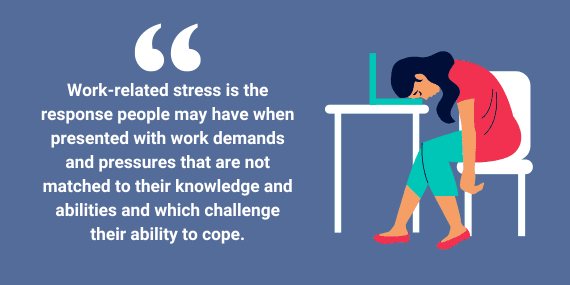
Source: The World Health Organization
Workplace stress occurs in jobs of all kinds, and, unfortunately, it often spills into other aspects of a person’s life. According to a study in 2023, “60% of UK employees claim that a poor work-life balance has had a negative effect on their relationships at home.” Some possible reasons for workplace stress are:- Heavy workloads
- Tight deadlines
- Changes in the organization
- A lack of work-life balance
- Intense pressure 😫
- Conflict with colleagues
- Feeling overwhelmed
- Long work hours 🕥
- Lack of growth opportunities ↗️
- Lack of support from senior members of staff 🧑💼
What's the Impact of Workplace Stress?
The impact of work-related stress goes beyond the physical workplace. Stress can affect a whole range of factors, like an employee’s physical and mental health 🧠.
Thus, stress has a detrimental impact on both the individual and the organization as a whole. Here are some examples of workplace stress:
Employee Well-Being
Stress can have a significant toll on a person’s well-being. Worry and stress can lead to a whole range of symptoms that impact a person’s physical health as well as their emotional state. For example, high levels of stress can lead to high blood pressure, heart disease, diabetes and strokes.
According to the Mayo Clinic, some common effects of stress are:
- Headaches
- Muscle tension/pain 💪
- Chest pain
- Fatigue
- Change in sex drive
- Sleep problems 💤
- Stomach upset
- Weak immune system 🤮
These health problems alone can lead to bad moods, increased heart rate and blood pressure, low self-esteem, anger and, in some cases, depression.
Overall, stress is extremely powerful in diminishing a person’s well-being. Poor well-being can lead to a person lacking motivation and productivity and, therefore, altering their performance at work.
Productivity and Performance at Work
As previously mentioned, stress can change a person’s performance at work by having a negative impact on their productivity.
High levels of stress can impact a person’s cognitive function, making it harder for employees to focus on tasks. In the workplace, this might have a negative effect on a worker’s performance.
Employee Morale
Employee morale is a critical factor in the workplace. High morale creates a positive work environment where people feel more comfortable, engaged and happy.
If your workplace has stressed employees, they might find building friendships or positive relationships at work too challenging. As a result, morale will decrease.
Staff Retention Issues
If your employees are suffering from stress in the workplace, they’ll likely search for a job elsewhere. This can lead to a high turnover rate, causing disruptions to workflow and an increase in costs for training and recruitment.
Overall, work-related stress can have a wide range of negative impacts on not just employees but organizations.
However, by recognizing and understanding the significance of stressed employees, you can implement strategies to address it. In the following section, we’ll look at some ways you can cope with stress in the workplace.
Ways for Employers to Reduce and Cope with Workplace Stress
As an employer, it’s your role to implement strategies to reduce and help employees overcome stress in the workplace. For individuals and organizations, putting strategies in place to support stress can foster a positive work environment.
Here are some ways to support your employees and help them deal with stress:
Offer Flexible Work Options
Implement flexible work options for your employees and allow them the option to work some days a week. You could introduce flexitime, compressed workweeks, and remote work 💻.
This will allow your employees to separate their professional and personal lives more effectively.
As a result, employees can spend time with family members or enjoy some alone time away from work, guilt and stress-free.
Encourage Breaks
Promote the importance of taking a break away from work to recharge your batteries 🔋. Encourage your employees to take regular breaks throughout the day to give them a break from their workload.
Studies found that breaks can reduce or prevent stress. They can even help to maintain performance throughout the day and reduce the need for a long recovery.
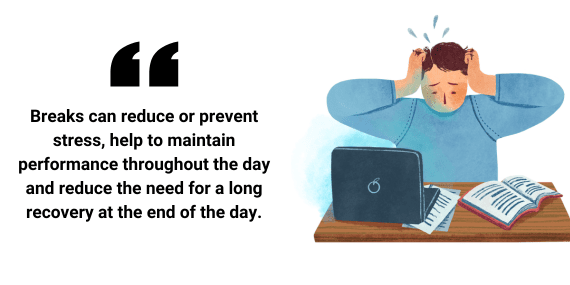
Source: The Wellbeing Thesis
Furthermore, encouraging your employees to take their vacation days ⛱️ can also help with their stress levels. A long break away from work will have a positive impact on their well-being.
As an employer, leading by example is vital. So, make sure you take your breaks, too!
By doing so, you’ll create a workspace where personal time is not only a luxury but a core value.
Promote Healthy Communication
There are many ways to promote healthier communication but for this article we will focus on one that is easy to do and will have an outsized effect on your team if implemented.
Real-time communication tools are everywhere in todays work environment but thanks to the “Read” status that is a feature on many messaging tools where a status of if the message sent has been “shown” to a user we are often tricked into a cycle of a needing a quick reply vs a considered reply in ones own time.
Disable that “Read” receipt and allow people to read and reply when the time is most appropriate, this is particularly important when dealing with 24 hour shifts or multi-timezone operations.
Offer Flexible Work Options
As a manager, your employees will appreciate your dedication to improving their well-being if you promote healthy communication.
Regularly checking in with your employees can offer them the chance to voice any concerns or struggles they’re facing.
By giving them a chance to express how they feel, you can suggest any changes or take steps to reduce their stress. For example, you might decide to reduce or reallocate their workload if they’re struggling.
Promoting healthy communication within your organization as a whole can help to reduce stress for your employees.
Create channels of communication where everyone can express their opinions openly and offer suggestions. This will make them feel more included and allow them to voice any ideas for reducing stress.
Provide Support and Resources
Providing resources to your employees will ensure that they know how to manage high levels of stress at work.
Offer access to counseling and support services. This will make your employees fully aware of the outlets they can use to help them cope.
Furthermore, training senior staff to notice signs of stress will help them intervene if an employee is struggling to cope.
If they flag any stress symptoms, they can intervene and suggest support services to help them as much as possible. Your employees will appreciate their concerns, enabling them to feel more comfortable voicing their thoughts.
Offer Training and Development Opportunities
In some cases, employees might not know the steps to take to deal with their stress.
By offering training programs, workshops and seminars, you can enlighten your workforce on the importance of managing their stress. Express the significance of stress management and any coping strategies they might not be aware of.
These training and development opportunities can equip your employees with long-term strategies to overcome stress. For example, you can offer your employees great tips to improve their well-being, like having a healthy diet and getting fresh air.
Promote Wellness Activities
Wellness activities are an essential part of stress management. As an employer, you can implement wellness schemes and activities to help lower the stress of your workforce.
Since stress can impact both a person’s body and mind, encouraging physical activity and deep breathing exercises can help.
Provide access to fitness classes to promote a healthy, de-stressing exercise routine for your employees. You could also even offer wellness activities like yoga classes 🧘to relieve the stress hormone cortisol.
By doing this, your employees will feel an overall increase in their well-being, general mood and energy levels.
Furthermore, if your employees take part in classes together, it’ll help them to build positive relationships with their colleagues. This, in hand, can also help to reduce workplace stress.
Set Realistic Expectations
As we mentioned above, heavy workloads and unrealistic job demands can be a significant source of stress.
To overcome this, employers should set realistic expectations of performance standards and responsibilities to employees. This can help to ensure your workforce doesn’t feel overwhelmed and unable to cope in a pressured environment.
Monitor your employees’ workloads to ensure they aren’t working through too many tasks at once. You can reallocate projects or assignments to prevent the burden from falling on just one person.
Moreover, make sure you set expectations of deadlines that are manageable and realistic.
By taking these steps and implementing them in your organization, you can support your employees.
What’s more, you can create a positive, productive and less stressful work environment.
By looking after your employees’ health and happiness, you’ll create a supportive environment in which they can work effectively.
How Can Employees Cope and Reduce Their Stress Levels?
To accompany these workplace strategies, employees can also take steps to reduce, cope with and overcome high-stress levels. Working hand-in-hand, employees and employers can collectively create a positive, healthy and low-stress environment.
Here are some ways employees can reduce their stress levels:
- Identify personal stress triggers and make a note for future situations
- Set boundaries to ensure you take time for yourself away from work
- Take regular breaks
- Do regular exercise 🏋️
- Pursue a wellness hobby like yoga
- Communicate with friends, family, and colleagues 👪
- Practice self-care
- Seek professional help
These are just some examples of what individual people can do to reduce their stress levels. By including some of these strategies in your daily routine, you can start reducing your stress levels.
Overall, workplace stress is a common challenge that occurs in workplaces all over the world. As a manager, understanding the significance of work-related stress is essential. However, implementing strategies to foster a positive, open and low-stress work environment is most important.
For more information about reducing stress in the workplace and promoting a positive work environment, check out our blogs.