 USA
USA AU
AU UK
UK ES
ES FR
FR BR
BR TH
TH IN
INForward vs Backward Rotation: What the Sleep Science Says
Two rosters can contain identical shifts, identical hours and identical crews — and one of them will leave your team chronically more tired. The difference is rotation direction, the most underrated variable in shift design.
The two directions
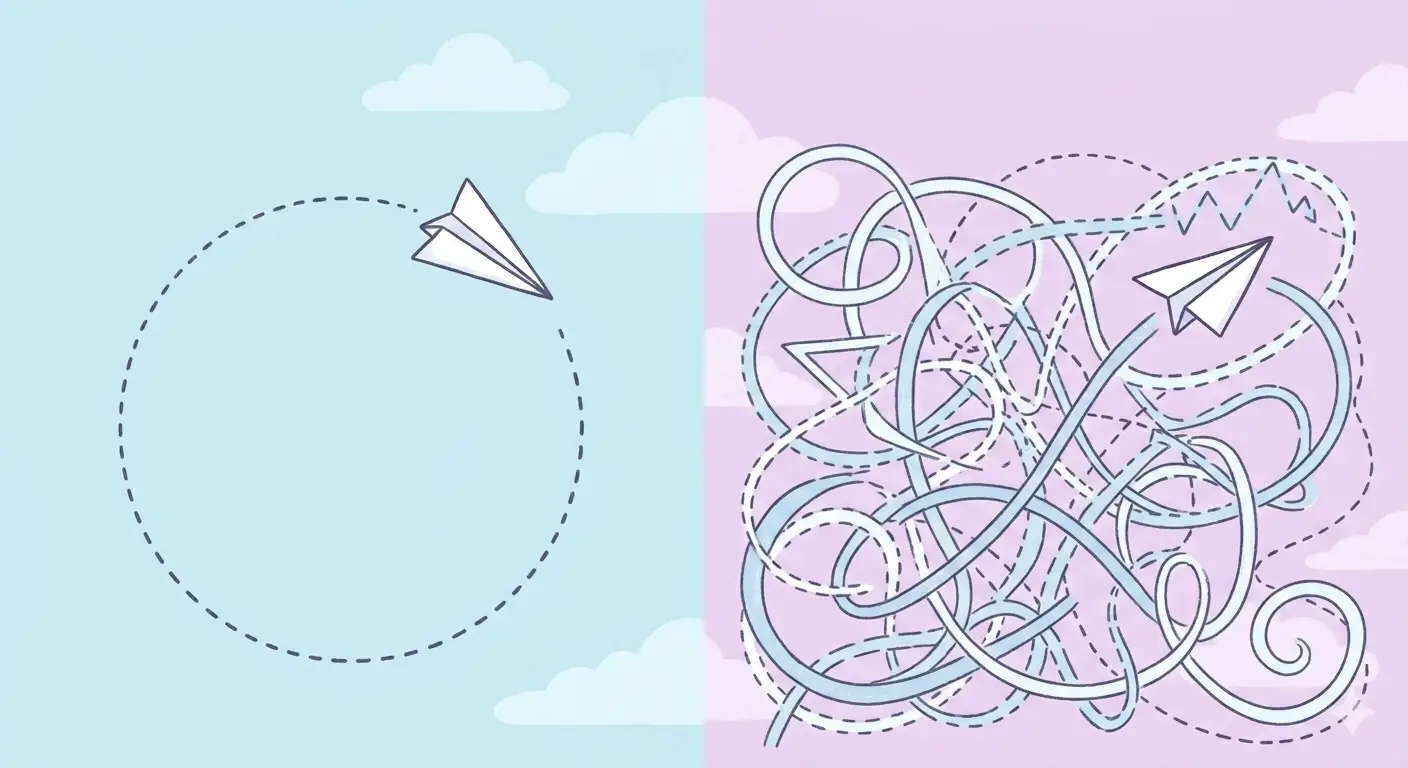
Forward (clockwise): day → evening → night → rest. Each transition moves sleep later. Backward (counter-clockwise): night → evening → day, or any ordering whose transitions move start times earlier. Each transition moves sleep earlier — against the body clock's natural late drift.
What the evidence says
Across decades of shift-work research the direction finding is unusually consistent: forward rotation produces longer sleep, better subjective alertness and less accumulated fatigue than backward rotation on otherwise matched schedules. The mechanism is the circadian clock's asymmetry — delaying sleep is physiologically easy, advancing it is hard — plus an arithmetic trap: backward transitions compress rest gaps. An evening shift ending 23:00 followed by a day shift starting 07:00 leaves eight hours door-to-door; the same two shifts ordered forward leave 32. That compressed gap is the quick return, and quick returns predict short sleep and elevated incident risk better than almost any other roster feature.
The comparison in one table
| Forward | Backward | |
| Sleep transition | Later each time — easy for the body | Earlier each time — resisted |
| Rest gaps at transitions | Long (24-32 h typical) | Short — quick returns built in |
| Research verdict | Consistently better sleep & alertness | Consistently worse, esp. fast rotations |
| Cost to switch | Zero — same shifts, re-ordered | |
What to do with this
Audit your roster's transitions (any rotating pattern has them): if any step moves start times earlier, reverse the sequence. Keep every rest gap above the 11-hour benchmark, and treat remaining quick returns as defects to engineer out, not quirks to live with. Direction is free; alertness isn't.
Build this schedule in Tommy
Set the rotation once and Tommy fills the weeks ahead — shift swaps, leave and coverage gaps handled in one place, with your team always seeing the latest version.